Milk protein grown in rice: inside Tokyo-based Kinish's molecular farming bet
Kinish, a Tokyo company, grows 20 cm dwarf rice in plant factories and is getting that rice to make casein. Here are the people, how the technology works, what's in the rice ice cream you can buy today, how its makers describe the taste, and where to find it in Japan.
Getting rice to make milk protein
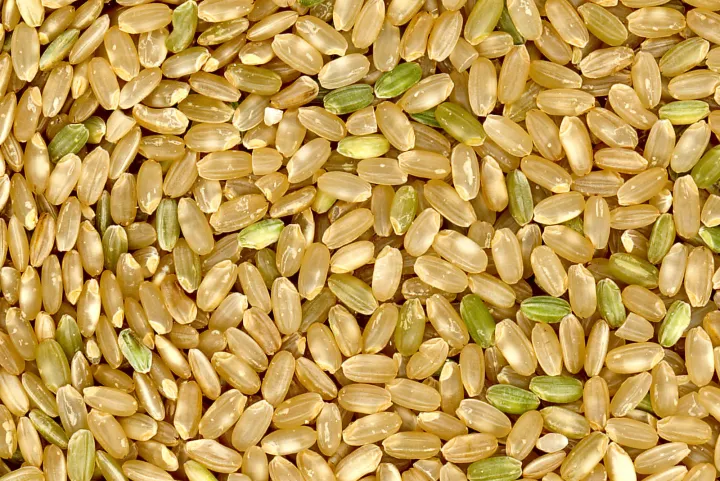
On October 20, 2026, Tokyo startup Kinish announced that it had gotten rice to produce casein, one of the main proteins in cow's milk (Source: Kinish press release, Oct 20, 2026).
The idea is to get milk ingredients from a crop instead of a cow. Kinish calls this plant molecular farming. The ice cream it sells today does not use that casein rice yet. The research and the product are at different stages.
The people behind it
Kinish was founded on January 30, 2023 (Source: Kinish website). Founder and CEO Hiroya Hashizume worked in strategy consulting and then led business development at a global food company. COO Atsushi Shibuya led food business development at a general trading company. Shimpei Ichikawa, who runs vertical farm design and operations, previously managed operations at major Japanese and international plant-factory companies (Source: Kinish website).
The company says taste is what holds plant-based dairy back. It cites a survey in which 70% of people called regular milk delicious, against 36% for plant-based milk (Source: Kinish website). In a 2025 release, Hashizume said good food is what delivers the small moments of delight people need (Source: Kinish press release, Feb 2025).
How it works: rice plants as protein factories
Here is the process, step by step.
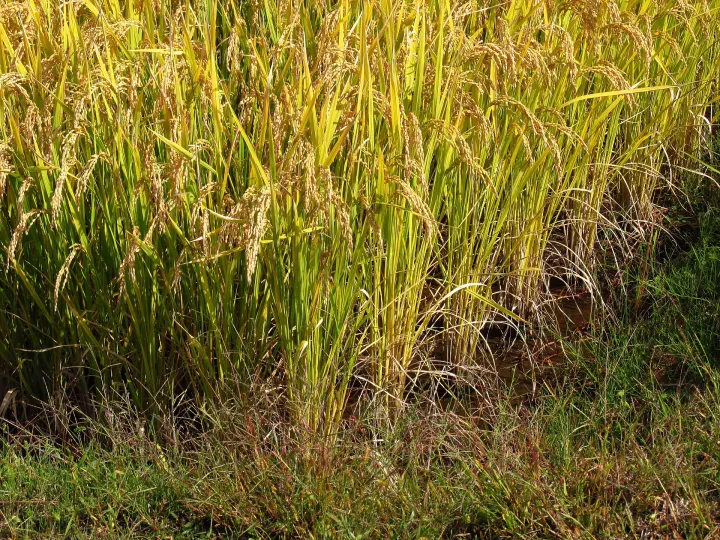
First, Kinish develops a rice variety that can make milk protein. Next, it grows that rice as dwarf plants about 20 cm tall, stacked in an indoor plant factory. The harvested grains carry the casein (Source: Kinish website). Unlike precision fermentation, which uses microbes in steel tanks, the plant itself does the job of the tank, as Green Queen reported (Source: Green Queen). Kinish has not published details such as which genes it uses or how.
How much a plant factory can grow
Kinish is researching plant-factory design with Shizuoka University (Source: Kinish press release, Feb 2025). In a trial it announced in 2026, it harvested 2,079.7 g of brown rice per square meter in three months. For comparison, the company cites Japan's average open-field yield of 539 g per square meter from one crop a year (Source: Kinish press release, Oct 20, 2026).
Kinish says it chose small plants so it can grow rice steadily and in volume anywhere, since rice grows poorly in heat (Source: Kinish website).
What you can buy: The Rice Creamery
The product on shelves is The Rice Creamery, a plant-based ice cream made mainly from rice. It launched on August 6, 2025, at Tokyu Store's Toritsu-Daigaku branch and on Seijo Ishii's online shop. Each flavor had a suggested price of ¥347 before tax and 113 to 122 kcal per cup (Source: Kinish press release, Aug 6, 2025).
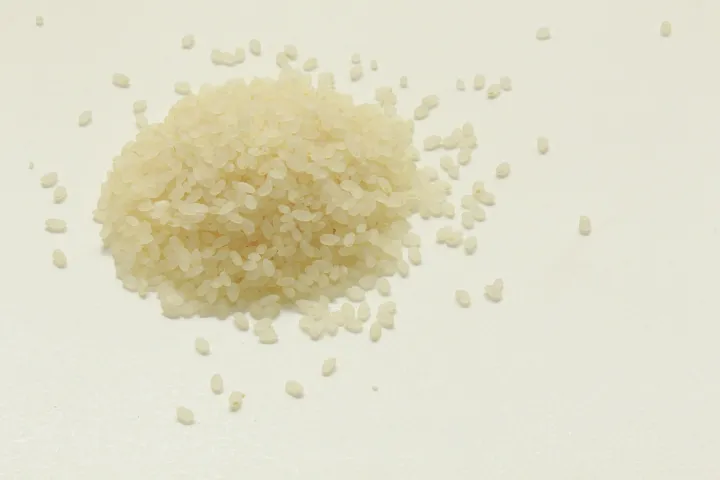
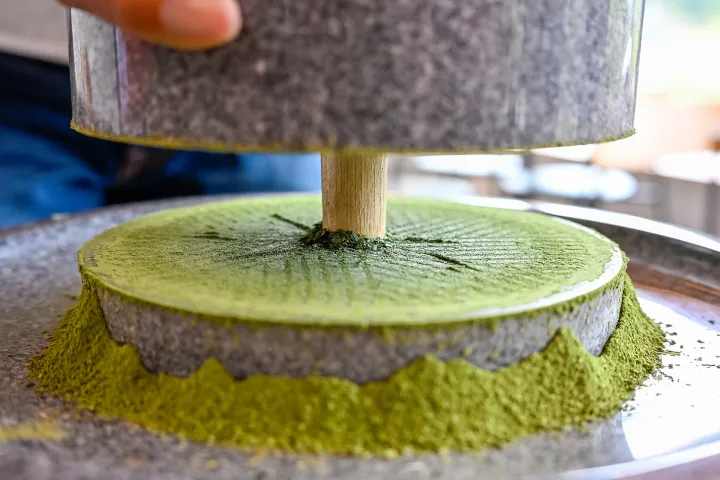
The ingredients are processed rice made in Japan, cashew paste, sugar, glucose, dietary fiber, salt, an emulsifier and a thickener. The matcha flavor adds matcha and the chocolate flavor adds cocoa. There is no milk or egg. The matcha comes from Hotta Katsutaro Shoten in Uji, and the cocoa is Dutch (Source: same, and Ryubo Shoji press release). Kinish says the rice in the ice cream is ordinary field-grown Japanese rice, not casein rice (Source: Kinish press release, Oct 20, 2026).
How the taste is described
Kinish says it made Honoka, the original flavor, so you can enjoy the natural sweetness and texture of rice. It quotes early tasters as calling it rich but with a pleasant aftertaste (Source: Kinish press release, Aug 6, 2025). Ryubo Shoji, which sells it in Okinawa, wrote that the flavor is mellow and deep, built on rice's sweetness and slightly chewy texture (Source: Ryubo Shoji press release).
The US site says rice gives a "naturally smooth sweetness" and a lighter body (Source: The Rice Cream website). Green Queen reported that the brand aims to bring out the sweetness of Japanese rice rather than copy milk (Source: Green Queen).
Can you buy it in Japan?
As of October 2026, Kinish says the ice cream is sold in about 500 stores in Japan (Source: Kinish press release, Oct 20, 2026). In Okinawa, FamilyMart stores began selling it on December 16, 2025 (Source: Ryubo Shoji press release). In April 2026, Kobe-based NINZIA brought back an online set of 10 gluten-free waffles and six cups of the ice cream for ¥9,000 including tax (Source: NINZIA press release). In June 2026 it was also served at a Ministry of Agriculture tasting of new foods (Source: Kinish news, Aug 7, 2026).
All three flavors contain cashew paste. If you need gluten-free, check the ingredient and allergen labels on the Japanese package rather than relying on the US site.
In the US: The Rice Cream
In the US, the ice cream is sold as The Rice Cream. From October 2025 it was available at a Washington, D.C. retailer and at Meta's D.C. office (Source: Kinish press release, Oct 20, 2026). The US site lists three flavors, Original, Matcha and Chocolate, and says they contain no dairy, eggs or animal products (Source: The Rice Cream website). Kinish has opened a New York office to expand local production and retail.
Next: casein-rice foods are still ahead
For foods made with casein rice, Kinish says it is developing a frozen dessert and a meltable cheese alternative. It has not given a launch date (Source: Kinish website).
Its next steps are breeding the rice for more casein, scaling up plant-factory trials to set a mass-production growing system, and using data to refine growing recipes (Source: Kinish press release, Oct 20, 2026). Whether it can raise the casein level and grow the rice in bulk indoors look like the next two hurdles.
Sources12
- Kinish 公式サイト(英語)(外部サイト)kini-sh.com
- Kinish 公式サイト(日本語)(外部サイト)kini-sh.com
- Kinish プレスリリース(2026年10月20日・シリーズA第1クローズ/カゼイン発現・植物工場試験)(外部サイト)kini-sh.com
- Kinish お知らせ(2026年8月7日・農林水産省主催 新規食品の試食会に出展)(外部サイト)kini-sh.com
- Kinish プレスリリース(PR TIMES、2025年2月・静岡大学との共同研究)(外部サイト)agri.mynavi.jp
- Kinish プレスリリース(PR TIMES、2025年8月6日・The Rice Creamery 発売)ASCII STARTUP 転載(外部サイト)ascii.jp
- リウボウ商事 プレスリリース(PR TIMES、2025年12月12日・沖縄ファミリーマートでの販売)(外部サイト)ryukyushimpo.jp
- NINZIA プレスリリース(PR TIMES、2026年4月26日・ワッフルアイスセット再販)(外部サイト)kobe-np.co.jp
- The Rice Cream(米国ブランド公式サイト)(外部サイト)the-ricecream.com
- The Rice Cream — Our Story(外部サイト)the-ricecream.com
- Green Queen(報道・補助)Japanese Startup Rolls Out Rice-Based Ice Cream(外部サイト)greenqueen.com.hk
- BRIDGE(報道・補助)Kinish シリーズA第1クローズ(外部サイト)thebridge.jp
Information as of November 2026.
Read next
All stories