Almond milk instead of cow's milk: three Japanese cartons compared by ingredients, allergens and where to buy
Almond milk is a plant-based stand-in for cow's milk. We line up the unsweetened cartons from Ezaki Glico, Marusan-Ai and Tsukuba Dairy using the makers' own ingredient lists, allergen labels, protein figures and buying options.
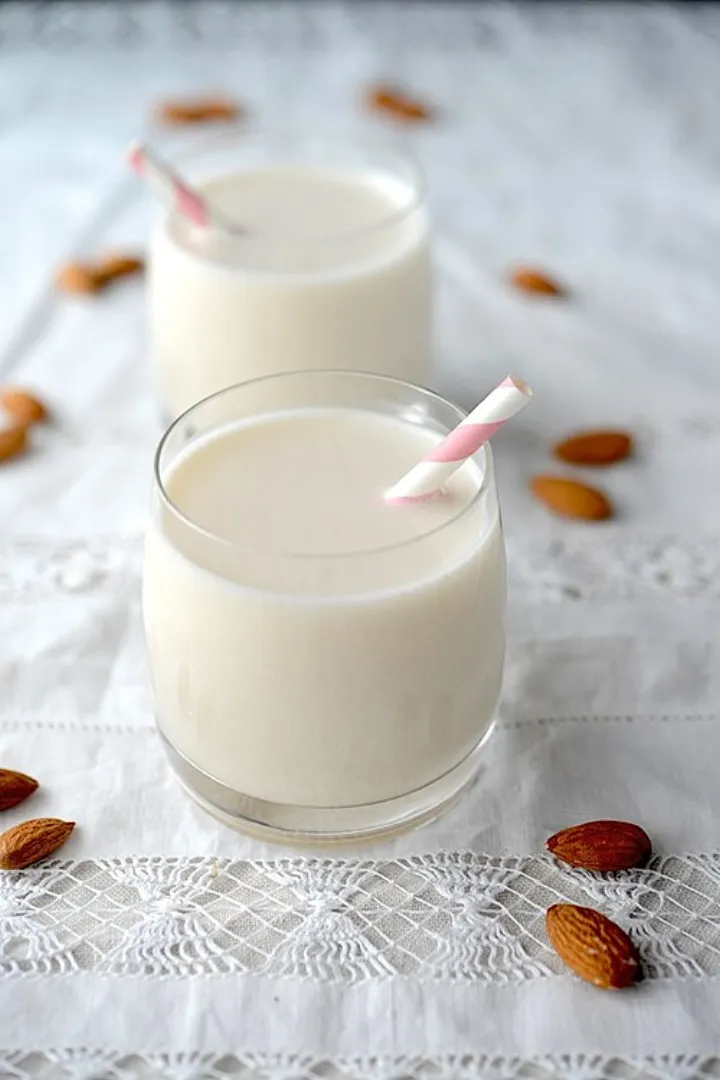
An 'almond beverage' in place of cow's milk
This guide covers almond milk, a plant-based alternative to cow's milk that you can drink or cook with. On Ezaki Glico's product page, the product type is labeled 'almond beverage' (Source: Ezaki Glico, unsweetened page). On March 19, 2026, the trade group Almond Milk Kenkyukai announced that Japan's almond milk market reached about ¥32.5 billion and roughly 70,000 kiloliters in 2025, more than a decade after the drink arrived in Japan in 2013. Its announcement featured 2026 products from Ezaki Glico, Kagome, Tsukuba Dairy and Marusan-Ai. Here we compare the unsweetened cartons from the three of those makers whose official pages we could check for ingredients and allergens (Source: Almond Milk Kenkyukai release).
How it's made: soak, grind, strain
On its brand page, Marusan-Ai says almond milk is made mainly from almonds and water: the almonds are soaked, ground into fine pieces, and the pieces are strained out (Source: Marusan-Ai brand page). In a 2016 release, Tsukuba Dairy described sorting almonds at its own nut plant, peeling them and grinding them whole, and said its 'Kobashi Roast' version is roasted after peeling (Source: Tsukuba Dairy 2016 release). Glico and Marusan-Ai both list 'almond paste' first in their ingredients, while Tsukuba Dairy lists the almonds themselves, so the labels show the nuts going in at different stages (Source: Ezaki Glico, unsweetened page; Marusan-Ai product page; Tsukuba Dairy official shop).
Ezaki Glico 'Almond Koka, No Added Sugar' 200ml
The ingredients are almond paste (almonds from the US), dietary fiber, salt and almond oil, plus a pH adjuster, calcium carbonate, flavoring and vitamin E, with the note that the product contains almonds. Almond is the allergen flagged among the 28 items Japan's labeling rules cover. Each 200ml carton lists 1.0g of protein, a best-before of 270 days from manufacture, and storage in a cool place out of direct sunlight. Glico describes the taste as 'clean and toasty, without sugar,' and the page links to Glico's online shop and a store finder (Source: Ezaki Glico, unsweetened page). The 'Original' 200ml in the same line is a sweetened version with sugar, high-fructose corn syrup and honey, and it lists 1.1g of protein (Source: Ezaki Glico, Original page).
Marusan-Ai 'Mainichi Oishii Roasted Almond Milk, No Added Sugar' 200ml
The ingredients are almond paste (made in Japan), dietary fiber (polydextrose), salt and vegetable oil, plus an emulsifier, a pH adjuster, gellan as a stabilizer, vitamin E and flavoring. The allergen field lists almond. Each 200ml carton has 1.6g of protein and a 365-day shelf life, and Marusan-Ai calls the taste 'clean, with the toasty aroma of roasted almonds.' The product page links to Marusan-Ai's own online shop, Amazon, Rakuten and LOHACO (Source: Marusan-Ai product page). On its brand page, the company says the drink resists separating when heated, so it works in hot dishes and baking (Source: Marusan-Ai brand page).
Tsukuba Dairy 'Koi Almond Milk, Maroyaka Plain' 1000ml
On Tsukuba Dairy's official online shop, the only ingredient listed is 'almonds (USA).' Each 1000ml carton uses about 100 almonds (counting each almond as 1g), with no flavoring or sugar added. It keeps at room temperature for one year from manufacture and is sold in cases of 12. In the maker's words, the taste has 'the gentle richness of almonds themselves and a mellow flavor' (Source: Tsukuba Dairy official shop). In 2016 the company, then headquartered in Ishioka, Ibaraki and led by president Hiroshi Umezawa, announced four 'Koi' (rich) almond milks with almond content of about 8–12%, and put Maroyaka Plain at about 10% (Source: Tsukuba Dairy 2016 release).
What to check on the label before you buy
All three are made from almonds. Glico and Marusan-Ai list almond as an allergen. Tsukuba Dairy's shop page has no allergen field, so check the carton or call the company's customer line (0120-503-326, weekdays 9:00–17:00) (Source: Ezaki Glico, unsweetened page; Marusan-Ai product page; Tsukuba Dairy official shop). If you avoid animal-derived ingredients, pick the unsweetened Glico rather than the Original, which contains honey. If you need gluten-free, check that wheat, barley and oats are absent from the ingredients, and ask each maker about its production lines. Whether a product is vegan and whether it is gluten-free are two separate checks (Source: Ezaki Glico, Original page). Protein varies from 1.0g to 1.6g per 200ml, so if protein matters to you, compare the nutrition panels (Source: Ezaki Glico, unsweetened page; Marusan-Ai product page).
Sources7
- 江崎グリコ「アーモンド効果 砂糖不使用 200ml」商品ページ(外部サイト)glico.com
- 江崎グリコ「アーモンド効果 オリジナル 200ml」商品ページ(外部サイト)glico.com
- マルサンアイ「毎日おいしいローストアーモンドミルク 砂糖不使用 200ml」商品ページ(外部サイト)marusanai.co.jp
- マルサンアイ ALMOND MILK ブランドページ(外部サイト)marusanai.co.jp
- 筑波乳業 公式通販「濃いアーモンドミルク まろやかプレーン 1000ml」(外部サイト)tsukubadairy.shop
- 筑波乳業 2016年9月26日発表(PR TIMES配信)(外部サイト)resemom.jp
- アーモンドミルク研究会 2026年3月19日発表(外部サイト)newscast.jp
Information as of November 2026.
Read next
All stories