What is plant-based meat made of? How a bean becomes meat-like fibre
Split the crop, build fibre with heat and pressure, then add colour and aroma. The process, step by step, from makers and researchers.
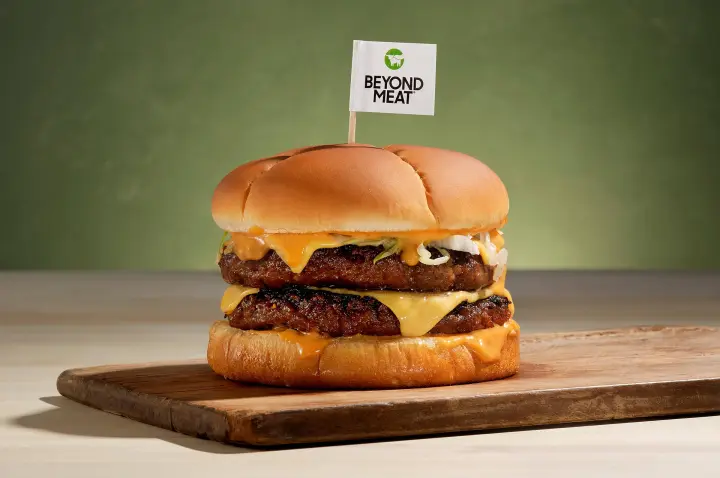
“Alternative meat” is not one food
The phrase covers foods that have little in common. Plant-based meat made from soy or peas, products built on mushrooms or mycelium, and cultivated meat grown from animal cells use different raw materials and different factories.
This guide stays with plant-based meat. How does a bean become something with grain and bite? Where do the colour and aroma come from? And what should you read on a Japanese label? We follow the process step by step.
Rebuilding meat’s components from plants
Beyond Meat describes its approach as gathering the usual components of meat — protein, fat, minerals, carbohydrates and water — from plants (Source: Beyond Meat, Our Ingredients). Its Beyond Burger page names peas and brown rice, and says the white flecks in the patty are made from coconut oil and cocoa butter. The nutrition panel lists 21g of protein per patty (Source: Beyond Meat, Beyond Burger).
According to the Good Food Institute (GFI), soy and wheat have been the main protein sources for plant-based meat. Pea and potato are gaining ground, and other pulses and seaweeds are being explored (Source: GFI, The science of plant-based meat).
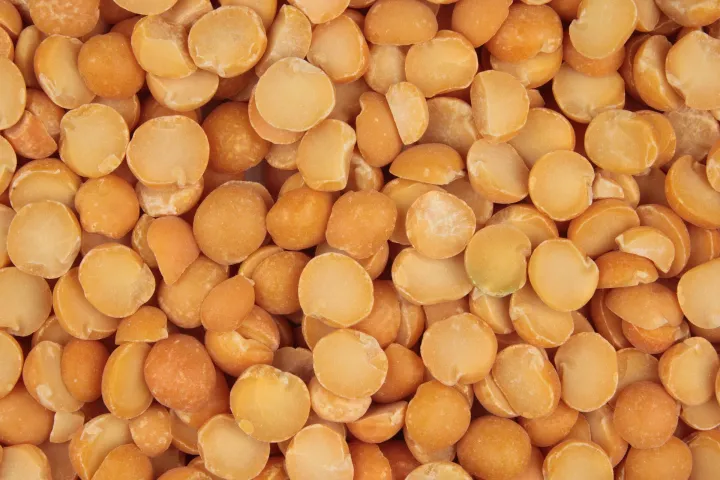
Step one: split the crop into powders
A whole bean cannot become a burger. It is milled first, then separated into protein, fat and starch. GFI calls fractions of roughly 60–70% protein “concentrates” and those of about 80–90% “isolates”. These dry powders are stored and later recombined in set ratios (Source: GFI).
This separation uses a lot of water and energy. GFI points to dry fractionation, which separates particles without water, as a lower-impact method still in development (Source: GFI).
Step two: heat and pressure make fibres
The workhorse is the extruder. Two screws turn inside a long barrel, mixing powder and water while heating and pressurising it, then push the mass out of a die. Beyond Meat says it uses a simple process of heating, cooling and pressure to create meat’s fibrous texture (Source: Beyond Meat, FAQ).
Patrick Wittek and colleagues studied this with soy protein isolate. Below 40% moisture, the product puffs into a dry, spongy material. Above 40%, with a long cooling die fitted to the end, it stays dense and forms aligned fibres. In their trials the mass reached 124–135°C and the die was held at 50°C. The paper explains that water-rich regions are stretched along the flow inside the die and then set as they cool (Source: Wittek et al., Foods, 2021).
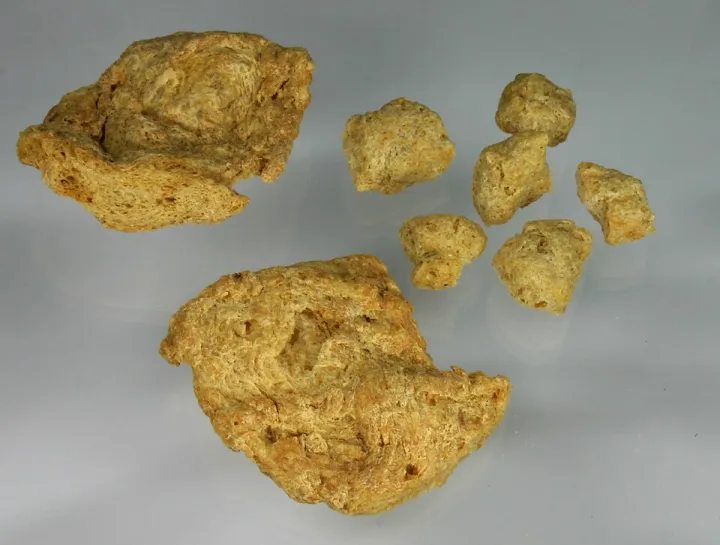
Step three: add colour and aroma
Freshly extruded protein has neither the colour nor the smell of meat. What gets added here is what makes each product different.
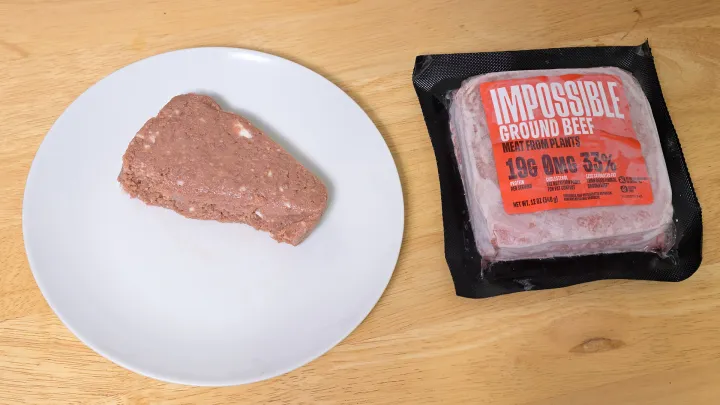
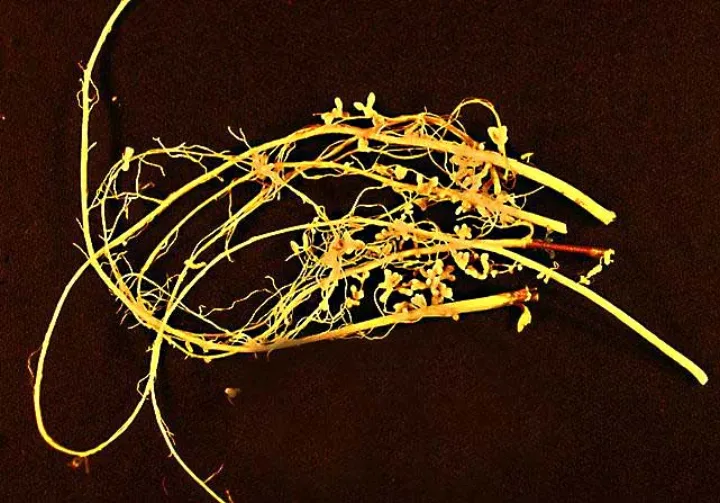
Impossible Foods uses soy leghemoglobin. The US Food and Drug Administration’s rule describes it as a reddish protein found in the root nodules of legumes. The version used in food is not taken from roots: it is produced by a genetically engineered yeast, Pichia pastoris, then concentrated. It is capped at 0.8% of the uncooked product by weight, and the FDA notes that the red colour is lost when the product is heated (Source: Federal Register, 1 August 2019). The colour additive was approved in 2019 and took effect in December that year after objections were resolved (Source: FDA).
Beyond Meat says it uses colours from fruits and vegetables (Source: Beyond Meat, FAQ).
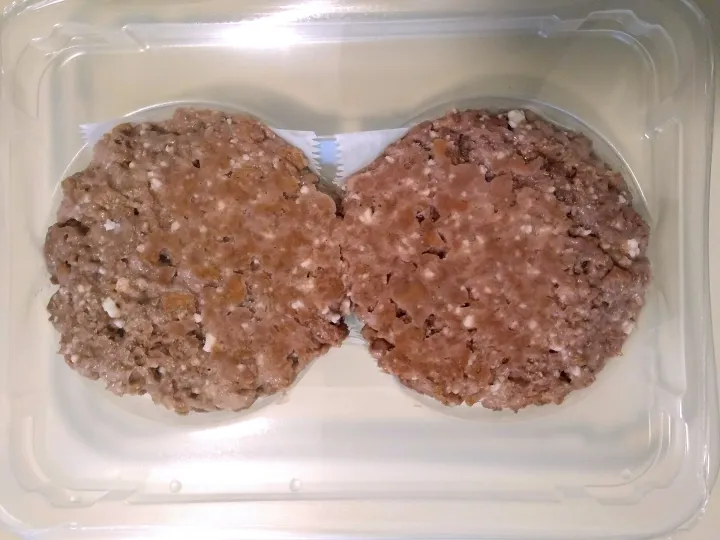
Japan’s sprouted soybeans: DAIZ and Koji Ochiai
Kumamoto-based DAIZ changes the soybean itself before any processing. A case study by the WIPO Japan Office credits the technology to director Koji Ochiai, who began studying seed germination, including wine grape seeds, in the 1990s before focusing on soybeans (Source: WIPO Japan Office, DAIZ case study).
In what the company calls the Ochiai high-pressure method, soybeans are packed into a tank to sprout while oxygen, carbon dioxide, temperature and moisture are tuned to stress them. The case study says that after about 13 hours, glutamic acid — a source of savoury taste — rises to ten times the level in ordinary soybeans. DAIZ uses a high-oleic soybean developed at Saga University and has trademarked the result as Miracle Meat. Its core patent (No. 5722518) was filed in 2007 and a follow-up (No. 5795676) in 2014 (Source: WIPO Japan Office).
Taste and texture, in other people’s words
Beyond Meat says its latest Beyond Burger is designed to look, cook and satisfy like beef, with a juicy texture similar to beef (Source: Beyond Meat, Beyond Burger). The WIPO case study says DAIZ can steer flavour toward pork, fish or beef by changing the amino-acid profile of sprouting soybeans (Source: WIPO Japan Office).
There are known gaps too. GFI says plant proteins often carry bitter or “beany” notes, and masking them is a research priority. It also notes that many products do not brown the way animal meat does (Source: GFI).
Choosing in Japan: read the label and the JAS mark
In Q&A guidance current as of August 2021, Japan’s Consumer Affairs Agency states that meat alternatives are not meat. A name such as “soy meat” is not automatically a problem, but labels should add wording such as “contains no meat”. Ingredients should be listed by common names such as “soybean” or “processed soybean”, and if the alternative is not 100% of the product, its share should be shown (Source: Consumer Affairs Agency Q&A).
The Ministry of Agriculture, Forestry and Fisheries has a Japanese Agricultural Standard for soy-meat foods. According to the committee record, “soy-meat food” must contain at least 10% soy protein and no animal ingredients, while “prepared soy-meat food” needs at least 1% and may use egg, milk or animal-derived seasonings (Source: MAFF JAS Council minutes). If you eat vegan, check which category a product falls under first. If you need to avoid gluten, look for wheat or wheat-containing textured protein in the ingredients and allergen panel.
What comes next
GFI notes that extruders can cost more than US$1 million each and use a lot of energy, and that heat and pressure can reduce some nutrients. Wageningen University in the Netherlands is developing a lower-energy “shear cell” at pilot scale (Source: GFI).
The crops themselves were bred mainly for oil and other uses rather than for meat-like foods. How far purpose-bred varieties and lower-energy steps such as dry fractionation spread may shape both the price and the taste of future products (Source: GFI).
Sources10
- Beyond Meat — The Beyond Burger(外部サイト)beyondmeat.com
- Beyond Meat — FAQ(外部サイト)beyondmeat.com
- Beyond Meat — Our Ingredients(外部サイト)beyondmeat.com
- GFI — The science of plant-based meat(外部サイト)gfi.org
- Wittek et al. (2021) High Moisture Extrusion of Soy Protein, Foods 10(1):102(外部サイト)pmc.ncbi.nlm.nih.gov
- Federal Register — Listing of Color Additives Exempt From Certification; Soy Leghemoglobin (2019-08-01)(外部サイト)govinfo.gov
- FDA — Effective date of final rule on soy leghemoglobin(外部サイト)fda.gov
- WIPO日本事務所 — DAIZ 知財活用事例(PDF)(外部サイト)wipo.int
- 消費者庁 — プラントベース食品等の表示に関するQ&A(外部サイト)caa.go.jp
- 農林水産省 — 日本農林規格調査会 議事録(大豆ミート食品類)(外部サイト)maff.go.jp
Information as of November 2026.
Read next
All stories