The red in a plant burger: how soy leghemoglobin (heme) works
Soy leghemoglobin is the ingredient that gives a ground-beef substitute its raw red color and its meaty smell on the grill. It is a soybean root protein made by fermenting engineered yeast. Here is how it is made, step by step, how US and EU regulators reviewed it, and the questions still open.
A stand-in for the heme in beef
Soy leghemoglobin goes into plant-based substitutes for ground beef to give them a red color when raw and a meaty smell when cooked. The US Food and Drug Administration approved it as a color additive, and only for ground beef analogue products (Source: Federal Register, final rule, Aug 1, 2019). The protein holds a small iron-containing part called heme, and Impossible Foods calls the ingredient "heme" in its plant-based meat (Source: ASBMB Today). It replaces something in meat. It does not tell you whether a product is vegan or gluten-free, so check each product's ingredient list for those.
It starts in a soybean root
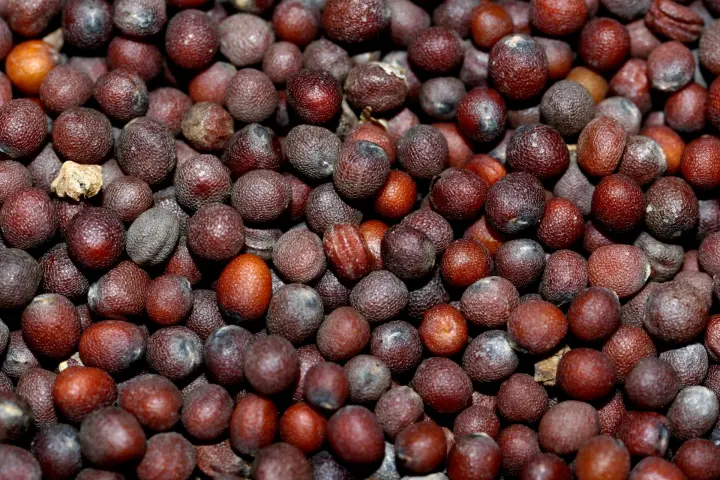
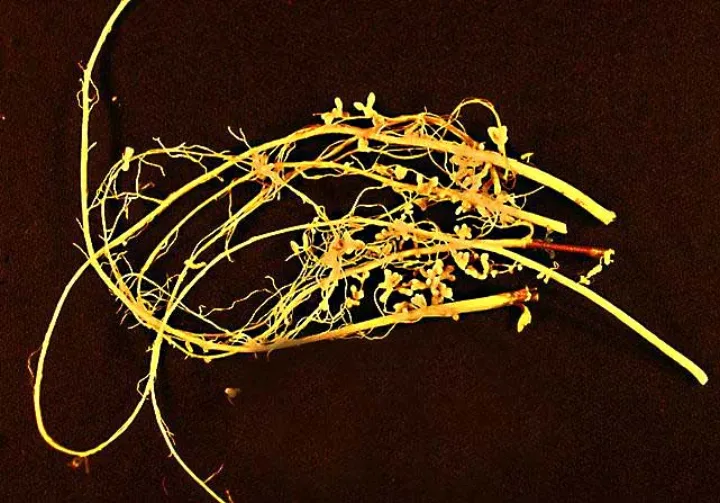
Leghemoglobin is the protein that turns soybean root nodules red. It belongs to the same family as myoglobin in animal muscle and hemoglobin in blood (Source: University at Buffalo, UBNow). Inside the nodule, it controls how much oxygen reaches the nitrogen-fixing bacteria (Source: University at Buffalo, UBNow). The team first planned to harvest it from nodules, but that didn't work at factory scale, so they had yeast make it instead (Source: ASBMB Today).
How the yeast makes it, step by step
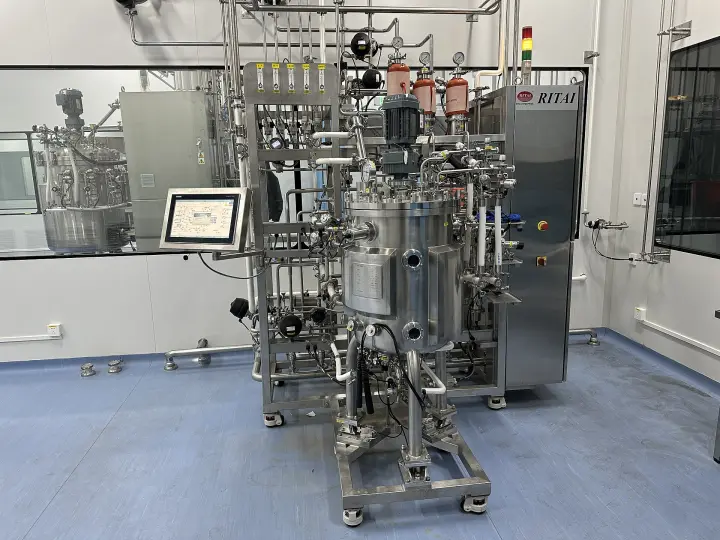
First, a strain of the yeast Pichia pastoris is engineered to make soy leghemoglobin, and it is fermented in controlled tanks. Next, the protein is concentrated, stabilized with salt and sodium ascorbate, and stored either as a frozen liquid or as a spray-dried powder (Source: Federal Register, final rule, Aug 1, 2019). The finished preparation is no more than 9 percent soy leghemoglobin, with small amounts of leftover yeast protein, and it can't exceed 0.8 percent of the uncooked product by weight (Source: Federal Register, final rule, Aug 1, 2019).
Heat changes the color and creates the smell
The FDA rule says the red color shows in the raw product but disappears on heating, because cooking breaks down the protein, so the cooked product turns brown (Source: Federal Register, final rule, Aug 1, 2019). An Impossible Foods patent describes the idea that meaty flavors form during cooking when flavor precursors react with each other, sped up by an iron complex such as a heme protein (Source: Google Patents US9700067B2). Mark O'Brian, a biochemistry professor at Buffalo, wrote that "Heme gives the Impossible Burger the appearance, cooking aroma and taste of beef." ASBMB Today reported that tasters compared the first prototype to "rancid polenta" (Sources: University at Buffalo, UBNow; ASBMB Today).
The scientist behind it: Pat Brown
Patrick O. Brown, who founded Impossible Foods, is one of the named inventors on the patent (Source: Google Patents US9700067B2). He is a professor emeritus of biochemistry at Stanford with an MD and a PhD from the University of Chicago. He founded Impossible Foods in 2011 and co-founded PLOS, a publisher that makes scientific papers free to read, in 2001 (Source: Stanford Profiles). ASBMB Today reported that he tried to get the food industry to take up the idea around 2009 and started the company himself when that went nowhere. "You don't solve the problem by asking people to change their diets," he said, and his goal has been to replace animal farming with better technology (Source: ASBMB Today).
The approval record, and the open questions
On July 23, 2018, the FDA sent a "no questions" letter in response to Impossible Foods' safety notice (GRN 737), and in 2019 it approved the ingredient as a color additive. The Center for Food Safety objected over the labeling, allergy testing and the FDA's reliance on the company's own notice, but the FDA rejected the objections in December 2019 (Sources: Federal Register, Aug 1, 2019; Federal Register, Dec 19, 2019; FDA). In Europe, the European Food Safety Authority's food additives panel found in June 2024 that the ingredient raised no safety concern at the proposed use. The GMO panel published its assessment in November 2024, but the European Commission and member states still have to make a decision before it can be sold (Sources: Emilia-Romagna Region, Europass; AgFunderNews). O'Brian also called the company's line that its heme is "made directly from plants" misleading, since yeast makes it (Source: University at Buffalo, UBNow). We couldn't find any published record of the ingredient being approved as a food additive in Japan. If you're buying abroad and want to avoid soy or ingredients made with engineered yeast, look for "soy leghemoglobin" on the ingredient list.
Sources9
- Federal Register: Listing of Color Additives Exempt From Certification; Soy Leghemoglobin (2019-08-01)(外部サイト)govinfo.gov
- Federal Register: Soy Leghemoglobin; response to objections (2019-12-19)(外部サイト)govinfo.gov
- FDA: FDA announces effective date for final rule adding soy leghemoglobin(外部サイト)fda.gov
- Google Patents: US9700067B2 (Impossible Foods Inc.)(外部サイト)patents.google.com
- Stanford Profiles: Patrick Brown(外部サイト)profiles.stanford.edu
- University at Buffalo, UBNow: Impossible Burger (Mark O'Brian)(外部サイト)buffalo.edu
- Regione Emilia-Romagna, Europass: EFSA opinion on soy leghemoglobin(外部サイト)regione.emilia-romagna.it
- ASBMB Today: Biochemistry of a burger (supporting)(外部サイト)asbmb.org
- AgFunderNews: EFSA GMO panel on Impossible Foods' heme (supporting)(外部サイト)agfundernews.com
Information as of November 2026.