Vegan is not gluten-free: the label rules in Japan and the US, and what to check
Plant-only food can still be made from wheat. Japan's vegan JAS and allergen labels, and the US FDA gluten-free rule, explained.
Two labels, two different questions
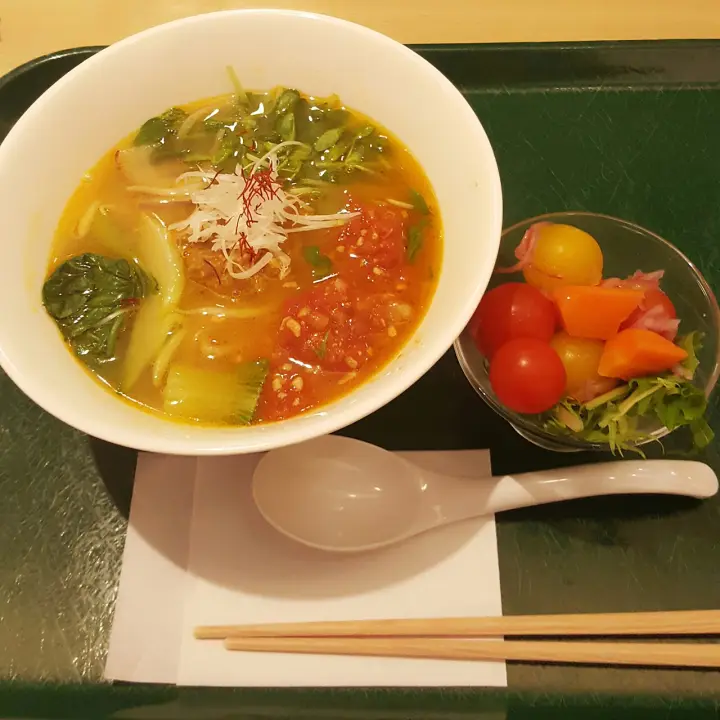
Vegan means nothing of animal origin. Gluten-free means no gluten. Gluten is a protein found naturally in wheat, rye, barley and crossbreeds of these grains, and it gives grain foods their shape, strength and texture, according to the US Food and Drug Administration (Source: FDA, Gluten and Food Labeling).
Wheat is a plant. So a vegan ramen made with wheat noodles is vegan but not gluten-free. A rice-flour cake made with eggs and milk is the reverse. Each label answers its own question, and each needs its own check.
Japan's vegan standard: JAS 0025
On 6 September 2022, Japan established a Japanese Agricultural Standard for processed foods suitable for vegetarians or vegans, JAS 0025 (Source: MAFF, JAS 0025:2022). The vegan criteria ban animal-derived materials not only in the ingredients a manufacturer uses directly, but also in the materials used to make those ingredients.
The three vegetarian categories allow honey and bee products such as beeswax and propolis. The vegan category has no such exception. It also rules out animal testing of the product by the manufacturer (Source: same).
The standard reaches into the factory
JAS 0025 covers how food is made, not just what goes in. Oil used to fry non-vegan ingredients may not be used. If a line is shared with non-vegan products, machines and tools must be thoroughly cleaned before vegan production starts. Words such as "vegan" must appear in the same field of view as the product name (Source: MAFF, JAS 0025:2022).
A separate JAS for restaurants serving vegetarian or vegan dishes sets out banned ingredients and requires accurate information for customers about dishes and ingredients (Source: MAFF overview of the vegetarian/vegan JAS). The standard states that it does not set requirements based on health or religious belief (Source: JAS 0025:2022, scope). It does not cover gluten either.
In Japan, wheat is labelled as an allergen
In Japan, the place to look for wheat is the allergen label under the Food Labelling Standards. Packaged processed foods must declare specified allergenic ingredients. As of April 2026 these are shrimp, cashew nuts, crab, walnuts, wheat, buckwheat, egg, milk and peanuts. Twenty more, including soybeans and sesame, are recommended for labelling (Source: Consumer Affairs Agency, Allergy labelling).
Allergens are normally named after each ingredient, as in "(contains wheat)", or listed together at the end, as in "(partly contains wheat and soybeans)". When a factory also handles wheat, a caution such as "this factory also produces products containing wheat" is recommended. A vague "may be present" statement on its own is not allowed (Source: same).
In the US, gluten-free is a number
In the US, the FDA issued its gluten-free labelling rule in 2013, and manufacturers had until August 2014 to comply. Any food labelled "gluten-free", "no gluten", "free of gluten" or "without gluten" must contain less than 20 parts per million of gluten (Source: FDA, Gluten and Food Labeling). The FDA says 20 ppm is the lowest level that can be consistently detected with valid scientific methods (Source: FDA, "Gluten-Free" Means What It Says).
The claim is voluntary, so a food without gluten may carry no such label. For fermented or hydrolysed foods such as yogurt, pickles or vinegar, gluten cannot be measured reliably, so manufacturers must keep records showing the food was gluten-free before fermentation (Source: Federal Register, final rule of 13 August 2020). Most meat and poultry, and most alcoholic drinks, are regulated by other agencies and fall outside the rule (Source: FDA, Gluten and Food Labeling).
US allergen labels and "may contain"
The US has nine major food allergens: milk, eggs, fish, crustacean shellfish, tree nuts, peanuts, wheat, soybeans and sesame. Sesame was added from 1 January 2023. Wheat must be named either after the ingredient, as in "flour (wheat)", or in a "Contains wheat" statement (Source: FDA, Food Allergies).
"May contain" statements are not required by law. They are meant only for unavoidable cross-contact and must be truthful and not misleading (Source: same). The absence of a "may contain" line is not proof that there is no cross-contact.
Some meat alternatives are made of wheat gluten
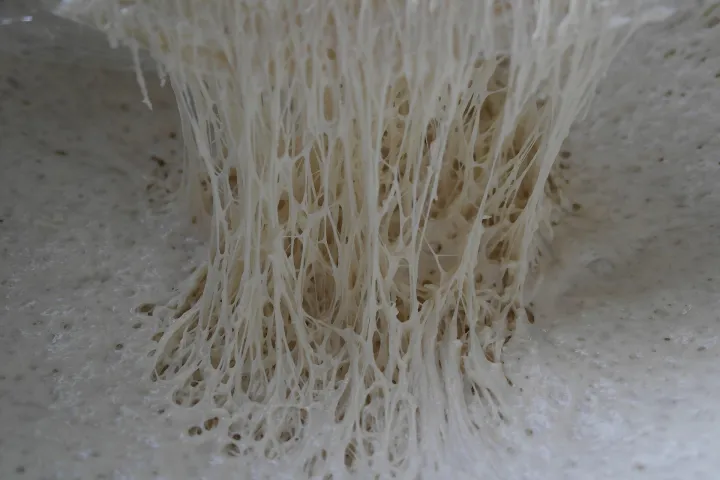
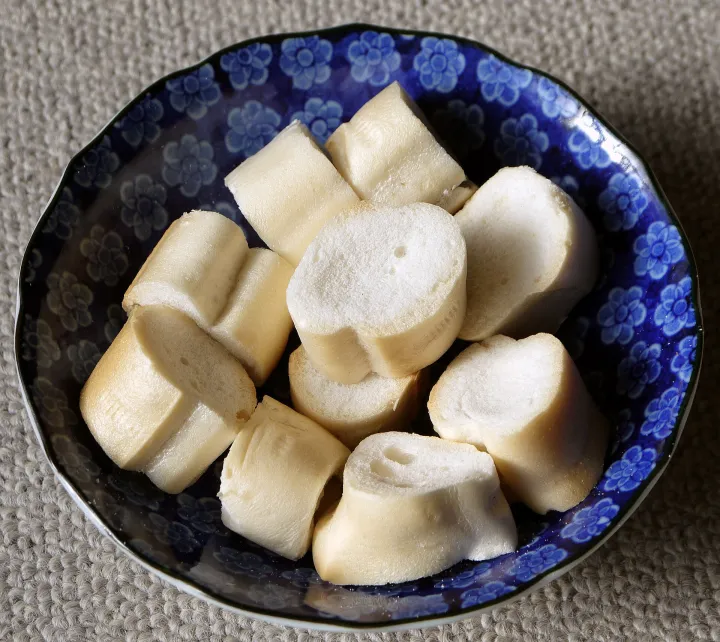
Knead wheat flour with water, then knead it again with plenty more water, and the gluten separates out. Bake that gluten with more flour and you get yaki-fu. Mix it with glutinous rice flour and steam or boil it, and you get nama-fu (Source: MAFF, Japan's traditional foods guide). Fu is a long-standing Japanese plant food built on wheat gluten.
Reading the label on a gluten-based product
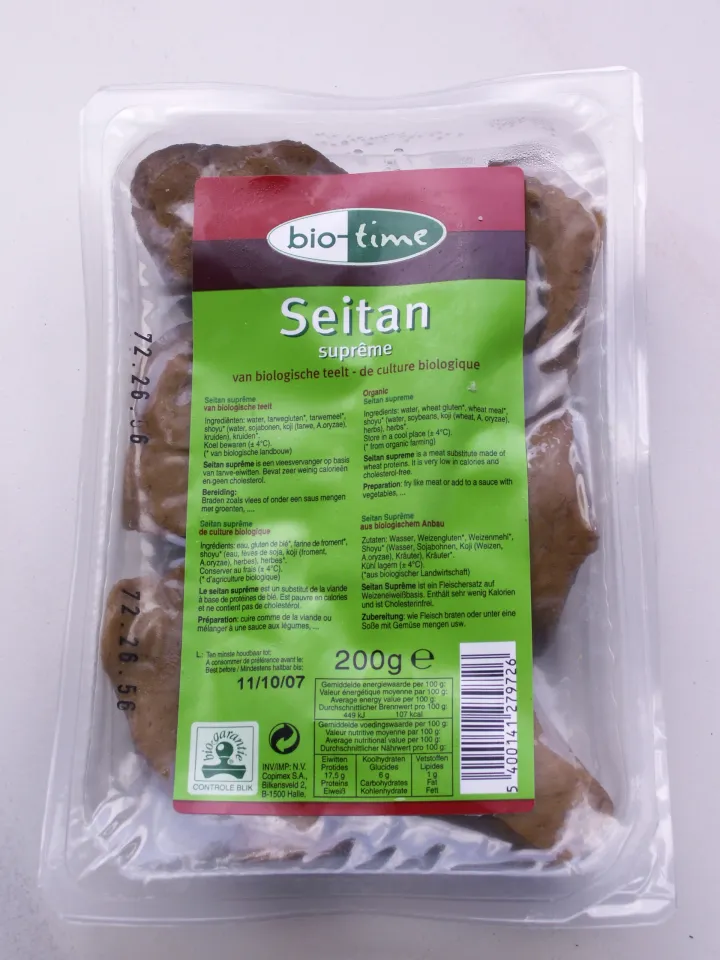
The same idea runs through many meat alternatives abroad. Tofurky's Smoked Ham deli slices list "water, vital wheat gluten, tofu" as their first ingredients, state "CONTAINS: SOY, WHEAT" and carry a vegan label (Source: Tofurky product page). They are vegan, but not gluten-free.
Australia's Fable takes the opposite route. Its product is built on shiitake mushroom stems with soy protein, and it is labelled "may contain wheat" because it is made in a facility that handles wheat. The company says independent tests have not detected gluten to date (Source: Fable FAQ). A product with no wheat in the recipe can still carry a wheat warning.
Eating out: ask about the dish, not the restaurant
AIN SOPH. Journey in Shinjuku says in its FAQ that every dish is plant-based. It marks some dishes, including its pancakes, rice-flour pasta and curry, with [GF]. It also says cross-contact can happen in the kitchen and that its food is not allergy-safe (Source: AIN SOPH. Journey official site). Even at a fully vegan restaurant, gluten-free varies dish by dish.
Restaurants and takeaway counters in Japan sit outside the labelling duty for packaged food. National policy instead promotes voluntary information from businesses, and the Consumer Affairs Agency published a survey of restaurant allergen information in May 2026 (Source: Consumer Affairs Agency, food allergy labelling initiatives, May 2026). If you want to eat gluten-free, ask before ordering about the noodles and batter, and also about sauces such as soy sauce and whether frying oil or pasta water is shared.
Checking before you buy
If you want to eat vegan, scan the ingredients for milk, egg, honey or gelatin. A vegan JAS mark means the product was made to a set standard, down to frying oil and line cleaning.
If you want to eat gluten-free, look for "wheat" and the factory caution on Japanese products, and for "gluten-free" and "Contains wheat" on US products. Rye and barley are not on Japan's mandatory allergen list, so read the full ingredient list. If you want both, run both checks separately. People with coeliac disease or a serious allergy should ask the manufacturer or restaurant directly how cross-contact is handled.
Sources13
- FDA — Gluten and Food Labeling(外部サイト)fda.gov
- FDA — "Gluten-Free" Means What It Says(外部サイト)fda.gov
- Federal Register — Gluten-Free Labeling of Fermented or Hydrolyzed Foods (13 Aug 2020)(外部サイト)govinfo.gov
- FDA — Food Allergies(外部サイト)fda.gov
- 農林水産省 — JAS 0025:2022 ベジタリアン又はヴィーガンに適した加工食品(外部サイト)maff.go.jp
- 農林水産省 — ベジタリアン又はヴィーガンに適した加工食品JAS(概要)(外部サイト)maff.go.jp
- 消費者庁 — アレルギー表示について(令和8年4月時点)(外部サイト)caa.go.jp
- 消費者庁 — 食物アレルギー表示に関する情報(外部サイト)caa.go.jp
- 消費者庁 — 食物アレルギー表示制度における消費者庁の取組(2026年5月)(外部サイト)mhlw.go.jp
- 農林水産省 — にっぽん伝統食図鑑(穀類)(外部サイト)maff.go.jp
- Tofurky — Smoked Ham Deli Slices(外部サイト)tofurky.com
- Fable — Product FAQ(外部サイト)fablefood.co
- AIN SOPH. Journey — Official site(外部サイト)ain-soph.jp
Information as of November 2026.
Read next
All stories