Daisy Lab: making milk proteins from yeast in a dairy nation
A former Fonterra employee and a microbiologist set out to make whey without cows. Prototypes, regulator approval, lactoferrin and a UK takeover.
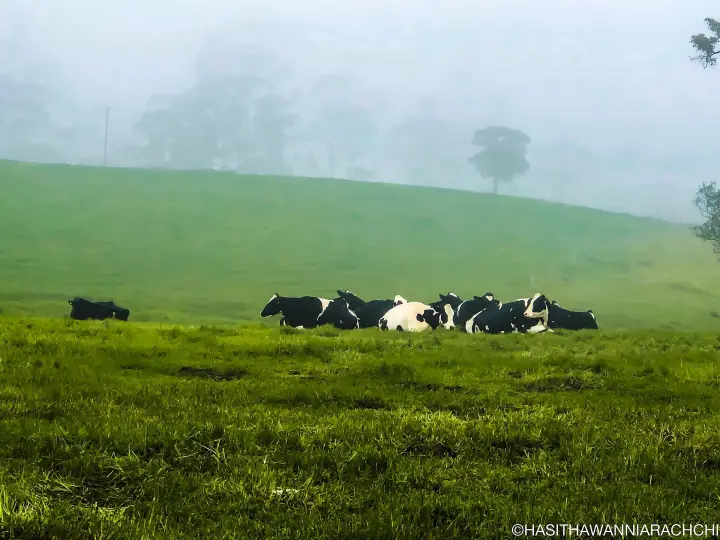
Cow-free milk protein in a dairy nation
Daisy Lab is an Auckland startup. Founded in 2021, it uses yeast and precision fermentation to make proteins identical to those in cow's milk (Source: Green Queen; Daisy Lab via Scoop).
New Zealand is a dairy export giant. Daisy Lab notes that the country ships close to 4 million tonnes of dairy products a year, and argues that its expertise in dairy processing and food manufacturing makes it the right place to make dairy without cows (Source: Daisy Lab).
Three founders
Chief executive Irina Miller worked at the dairy co-operative Fonterra, became vegan and went on to launch Daisy Lab (Source: Green Queen). She told The Spinoff she had learned about microbe-made food ingredients and waited for someone in New Zealand to start. Then nobody did (Source: The Spinoff).
Chief science officer Dr Nikki Freed is a University of Auckland microbiologist. Co-founder Emily McIsaac worked with the microbes as a Massey University student, on a master's thesis funded by Daisy Lab (Source: The Spinoff). She serves as chief operating officer (Source: Green Queen).
The product: beta-lactoglobulin first
The first protein Daisy Lab scaled was beta-lactoglobulin, the most common protein in cow's whey. It is also developing other dairy proteins, including the rare and valuable lactoferrin (Source: Daisy Lab via Scoop).
In the twelve months to May 2024, the company says it went from milligram quantities to prototype ice cream, yoghurt and cream cheese made with beta-lactoglobulin (Source: Daisy Lab via Scoop). It does not plan to sell to shoppers directly. Miller has described the goal as becoming an IP partner to food and beverage companies (Source: Green Queen).
How it works: from benchtop to 5,000 litres
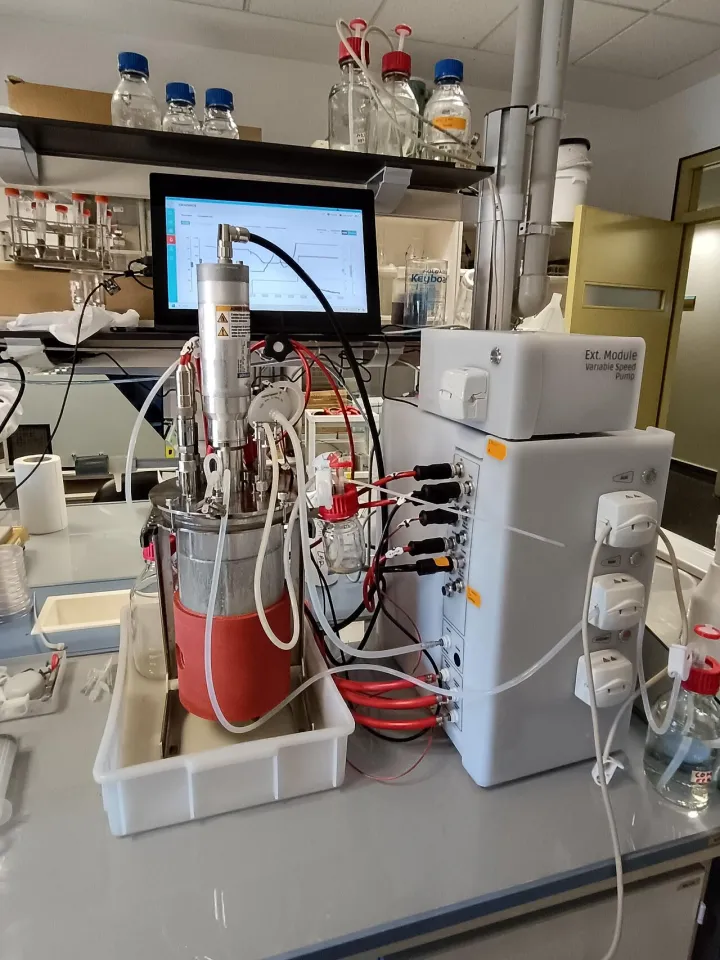
Early trials ran on small fermenters borrowed from an academic group, before the team added a benchtop bioreactor with automation and data tracking (Source: INFORS HT). Whey protein powder from 10-litre fermenters went through external testing. Yield reached 10 grams per litre, beating an initial target of 3 grams, and the next goal is 20 to 30 grams (Source: Green Queen).
Miller says the edge is a "clean" fermentation liquid in which most of what the microbe secretes is dairy-identical protein (Source: Callaghan Innovation). That, the company says, lets the downstream work run on existing dairy kit: decanters, microfiltration and ultrafiltration membranes, and spray dryers (Source: Daisy Lab via Scoop).
Taste: an evening with an ice-cream maker
In March 2024 Daisy Lab teamed up with Auckland ice-cream maker Gianpaolo Grazioli for a tasting attended by investors and industry guests (Source: Callaghan Innovation).
Miller said they used very simple ingredients so nothing would mask the protein. There was very little feedback on the taste, which was exactly what they wanted, because naturally occurring dairy proteins have a very mild flavour. What matters, she said, is that flavour and mouthfeel match dairy made the traditional way (Source: Callaghan Innovation). Earlier she had told The Spinoff that whey "doesn't taste like much" (Source: The Spinoff).
The EPA approval: what it actually covers
On 16 May 2024, New Zealand's Environmental Protection Authority approved Daisy Lab's application to produce dairy-identical proteins using genetically modified organisms in a contained facility. The company already held approval to modify two types of yeast in containment; the new decision let it scale up (Source: NZ EPA via Scoop).
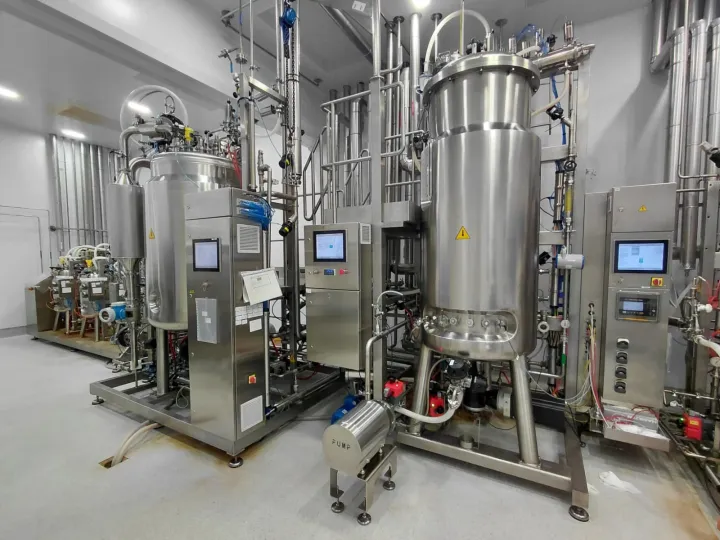
The EPA required controls to keep the yeast contained at all times and said the facility would be inspected. The application went through a rapid pathway, with a decision in ten working days (Source: NZ EPA via Scoop). Daisy Lab says it can now scale to a total volume of up to 5,000 litres and build its first pilot facility (Source: Daisy Lab via Scoop). This is permission to research and produce, not permission to sell food.
Lactoferrin: beyond what a cow makes
Lactoferrin occurs in cow's milk only in tiny amounts. In May 2025 Daisy Lab said its yeast system could make multiple grams per litre, compared with roughly 0.02 to 0.2 grams per litre in cow's milk (Source: FoodBev Media).
Target uses include infant formula, functional foods and supplements. Miller also said, "We are still in development" (Source: FoodBev Media). The company believes a scarce, high-value protein like lactoferrin could become cheaper sooner than bulk whey proteins (Source: Green Queen).
2026: joining a UK group
In October 2026, UK industrial biotech company Mycofeast was reported to have acquired Daisy Lab, with terms undisclosed. Mycofeast runs a 16-million-litre fermentation plant in Europe, and Daisy Lab gives it its first base in Australasia (Source: vegconomist).
Daisy Lab has already moved to in-house fermentation at 500-litre pilot scale. The founders will keep running the New Zealand business and take on group roles, and lactoferrin work will continue with Mycofeast's California R&D unit, Evolutia Bio (Source: vegconomist). Miller said that trying to build every capability around the technology yourself becomes much less rational (Source: vegconomist).
Japan, and what comes next
There is no announcement of consumer products made with Daisy Lab's proteins on general sale. The company describes its lactoferrin as still in development (Source: FoodBev Media). In Japan, foods and additives made with recombinant DNA technology need a Consumer Affairs Agency safety review before they can be sold (Source: Consumer Affairs Agency).
The questions now are how to move from 500 litres to factory scale, and how to pass food approvals market by market. Research permission, food approval and retail sale are separate stages, and each deserves its own scrutiny.
Sources12
- Daisy Lab — Official website(外部サイト)daisylab.co.nz
- Daisy Lab — Why New Zealand?(外部サイト)daisylab.co.nz
- NZ EPA — EPA approves precision fermentation of milk proteins (Scoop, 16 May 2024)(外部サイト)scoop.co.nz
- Daisy Lab — Daisy Lab obtains EPA approval to scale to 5,000L (Scoop, 16 May 2024)(外部サイト)scoop.co.nz
- RNZ — Daisy Lab given green light to expand (17 May 2024)(外部サイト)rnz.co.nz
- The Spinoff — Beyond milk: the New Zealanders at the forefront of lab-grown dairy (2022)(外部サイト)thespinoff.co.nz
- Green Queen — Daisy Lab scales animal-free whey production (2024)(外部サイト)greenqueen.com.hk
- Callaghan Innovation — Daisy Lab and ice-cream icon taste test dairy-identical dessert (18 Mar 2024)(外部サイト)callaghaninnovation.govt.nz
- INFORS HT — Daisy Lab uses precision fermentation in INFORS HT bioreactors(外部サイト)infors-ht.com
- FoodBev Media — Daisy Lab breakthrough yields high levels of lactoferrin (12 May 2025)(外部サイト)foodbev.com
- vegconomist — Mycofeast buys Daisy Lab (15 Oct 2026)(外部サイト)vegconomist.com
- 消費者庁 — 遺伝子組換え食品の安全性審査(外部サイト)caa.go.jp
Information as of November 2026.
Read next
All stories