How cultivated meat works: from cells to food
Cultivated meat is grown from animal cells. Here are the FDA's four production stages, the people behind it from the first burger in 2013 to salmon on US restaurant menus, how its taste has been described, and where Japan's rules stand.
A different starting point from plant-based meat
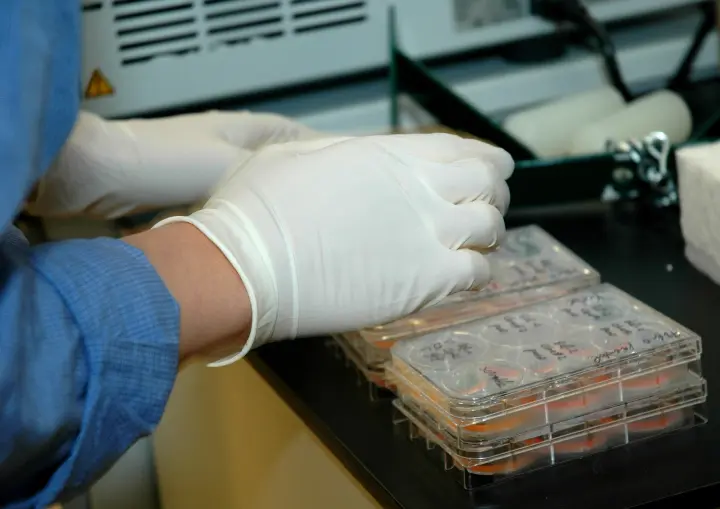
Cultivated meat is food made by growing cells taken from an animal in a controlled environment. The US Food and Drug Administration (FDA) calls it "human food made with cultured animal cells" (Source: US FDA). In Japan, regulators use the working term "cell-cultured food" (Source: Consumer Affairs Agency subcommittee minutes, May 28, 2026).
Plant-based meat assembles soy or pea proteins to look and taste like meat. Cultivated meat is different in both ingredients and process. Its raw material is real animal cells.
The process, step by step
The FDA describes production in four stages (Source: US FDA).
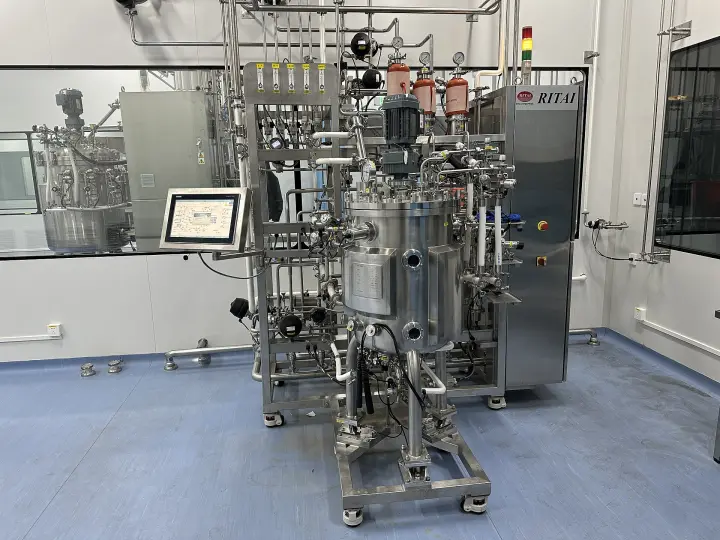
1. Take a small tissue sample from an animal. The FDA says this does not require harming or killing the animal. Selected cells are screened and stored as a cell bank. 2. Take a few cells from the bank and grow them in sealed, sterile vessels of increasing size until they number in the billions or trillions. 3. Add growth factors (proteins that signal cells how to develop), surfaces for cells to attach to, and nutrients, so the cells become muscle, fat or connective tissue. 4. Harvest the cells and process and package them like any other food.
What it looks like in real products
Two US companies show more of what happens inside those steps.
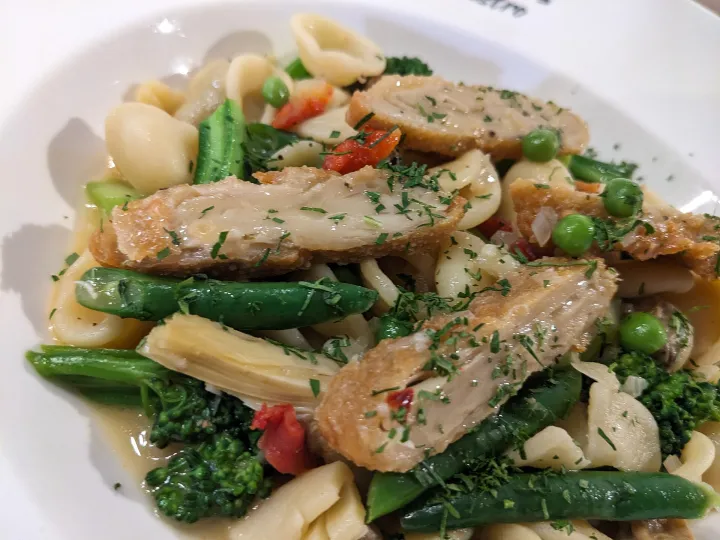
Wildtype's salmon starts from cells taken from coho salmon fry, just after hatching, at a Washington state hatchery. The cells can become fat, muscle or connective tissue, and they grow floating in liquid. AgFunderNews reported that, according to FDA documents, the harvested cells are heated to break down leftover growth factors (Source: AgFunderNews).
Mission Barns grows fat cells from a small pig tissue sample and combines the fat with plant protein to make meatballs and bacon (Source: Mission Barns website). FoodNavigator reported that its fat is made without genetic engineering (Source: FoodNavigator).
The people who started it
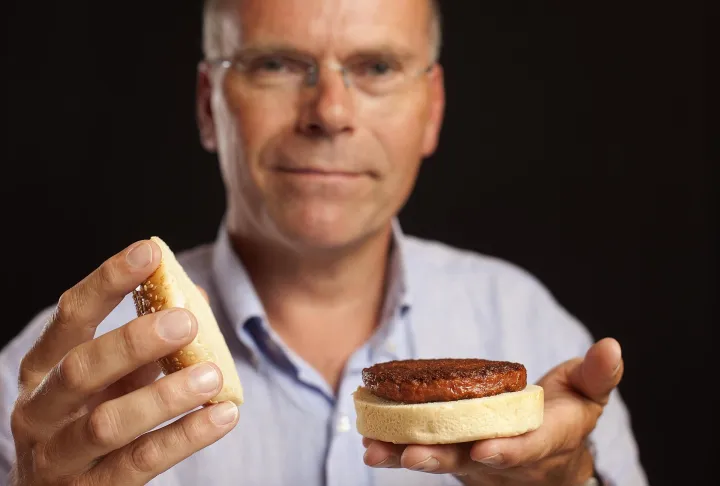
The first to grab global attention was Mark Post, a vascular biologist at Maastricht University in the Netherlands. On August 5, 2013, he presented a cultured beef burger in London. Reports say he spent two years growing about 20,000 muscle fibers to make a single patty (Source: The Scientist).
In the US, Wildtype was founded in 2016 by cardiologist Aryé Elfenbein and former diplomat Justin Kolbeck (Source: AgFunderNews). In Japan, Professor Shoji Takeuchi of the University of Tokyo and Nissin Foods Holdings have worked together on "cultured steak" since fiscal 2017 (Source: University of Tokyo press release).
How taste and texture have been described
At the 2013 tasting, US food writer Josh Schonwald said "the bite feels like a conventional hamburger," and that the meat tasted "like an animal-protein cake" (Source: The Scientist).
In 2022, the University of Tokyo and Nissin announced that researchers had tasted cultured meat made only from edible materials. Takeuchi said it was chewier than he expected. He said it did not yet taste like meat because it had no fat or iron, but that savory flavor came through as he chewed (Source: JST Science Portal).
In its own words, Wildtype describes its salmon as having a "buttery, melt-in-your-mouth texture" (Source: Wildtype website).

The rules in the US
In the US, the FDA oversees cell collection, cell banks and cell growth. For cattle, pigs, chickens and similar animals, the USDA's Food Safety and Inspection Service (FSIS) takes over from harvest onward, including labeling. For other species, such as most fish, the FDA alone is responsible. Imports of cultured meat and poultry products are not currently allowed (Source: US FDA).
The FDA's inventory lists five completed pre-market consultations: UPSIDE Foods (chicken, Nov 2022), GOOD Meat (chicken, Mar 2023), Mission Barns (pork fat, Mar 2025), Wildtype (coho salmon, May 2025) and Believer Meats (chicken, Jul 2025) (Source: FDA consultation inventory). The consultation is voluntary and done product by product. For the first one, the FDA said it had "no further questions at this time" about the firm's safety conclusion, and it says meeting all requirements remains the maker's responsibility (Source: US FDA).
Where people have eaten it
AgFunderNews reported that Wildtype's salmon began appearing in June 2025 at Kann, a restaurant in Portland, Oregon (Source: AgFunderNews). Mission Barns announced plans to sell at Fiorella restaurants in San Francisco and at select Sprouts supermarkets (Source: FoodNavigator).
The Singapore Food Agency (SFA) allowed Eat Just's cultured chicken as an ingredient in nuggets and said it found no food safety concerns. In Singapore, such products must be labeled with terms like "cultured" (Source: Singapore Food Agency).
Where Japan stands
In Japan, a novel foods subcommittee under the Consumer Affairs Agency's food sanitation standards council is drafting guidelines for checking the safety of cell-cultured food. Its September 29, 2025 meeting was on the topic (Source: Consumer Affairs Agency meeting notice). At its May 28, 2026 meeting, it discussed draft guideline text and heard from consumer groups (Source: Consumer Affairs Agency minutes).
There, the Housewives Federation raised concerns about growth factors and culture media and called for clear labeling (Source: same). How such foods would be cleared for sale has not been decided yet.
The hurdles ahead
The biggest hurdles are volume and price. The University of Tokyo team lists making the meat tasty and cheap as one of its technical challenges. In 2022 its meat was about 1 mm thick, and it was aiming for a 2 cm steak (Source: JST Science Portal).
Mission Barns also blends its cultivated fat with plant protein (Source: Mission Barns website), and FoodNavigator reported, citing Chief Business Officer Cecilia Chang, that its production is still very limited (Source: FoodNavigator). Making whole cuts from cells alone and selling them at everyday prices still looks some way off.
Sources13
- US FDA — Human food made with cultured animal cells(外部サイト)fda.gov
- US FDA — Inventory of completed pre-market consultations(外部サイト)fda.gov
- US FDA — Human Food Made with Cultured Animal Cells Inventory(データベース)(外部サイト)hfpappexternal.fda.gov
- Singapore Food Agency — Safety of Alternative Protein(外部サイト)sfa.gov.sg
- 消費者庁 — 令和7年度第2回 食品衛生基準審議会新開発食品調査部会 開催案内(外部サイト)caa.go.jp
- 消費者庁 — 令和8年度第2回 食品衛生基準審議会新開発食品調査部会 議事録(2026年5月28日)(外部サイト)caa.go.jp
- 東京大学 プレスリリース(2022年3月31日・食べられる培養肉)(外部サイト)u-tokyo.ac.jp
- JST サイエンスポータル(2022年4月14日)(外部サイト)scienceportal.jst.go.jp
- Wildtype 公式サイト(外部サイト)wildtypefoods.com
- Mission Barns 公式サイト(外部サイト)missionbarns.com
- The Scientist(報道・補助)Lab-Grown Burger Taste Test(外部サイト)the-scientist.com
- AgFunderNews(報道・補助)FDA clears Wildtype's cell-cultivated salmon(外部サイト)agfundernews.com
- FoodNavigator(報道・補助)Mission Barns next steps(外部サイト)foodnavigator.com
Information as of November 2026.