Precision fermentation: how yeast can make the proteins in milk
Engineered yeast, a steel tank and a dairy-style finishing line. How it works, how it tastes, how it is labelled and what Japan requires.
Fermentation that makes an ingredient, not a dish
Miso, bread and yoghurt come from microbes changing a whole food. Precision fermentation works differently. It uses yeast or other microbes as "cell factories" to make one specific ingredient (Source: GFI).
The targets include proteins, fats, flavour compounds, enzymes and pigments. GFI notes that these ingredients are usually purified to a high standard and added to food in small amounts (Source: GFI).
It is already in the kitchen
The idea sounds new, but fermentation-made ingredients have been around for a long time. New Zealand's Daisy Lab lists flavours, cheese rennet and vitamins as things people have eaten for decades (Source: Daisy Lab). GFI points to vitamin B12, riboflavin and chymosin, the enzyme that replaced rennet taken from calves' stomachs (Source: GFI).
What has changed is the push to apply the same method to the proteins in milk.
How it works, part one: give the yeast a blueprint
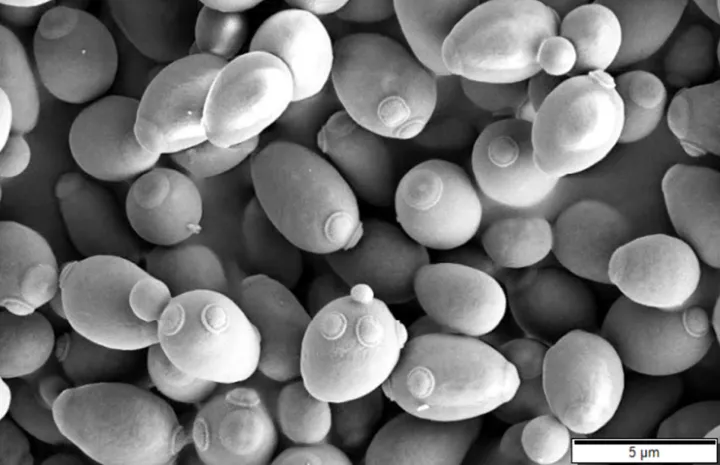
The first step is to place the gene for the target protein inside a microbe. New Zealand's Environmental Protection Authority (EPA) describes yeast modified to carry the gene that codes for the desired protein (Source: NZ EPA via Scoop).
Daisy Lab co-founder Emily McIsaac put it simply in an interview: the team takes a piece of DNA and puts it inside a friendly microorganism. The same article explains that a misplaced sequence can stop the microbe working, and that getting the protein exported out of the cell takes a bag of tricks (Source: The Spinoff).
How it works, part two: grow, separate, dry
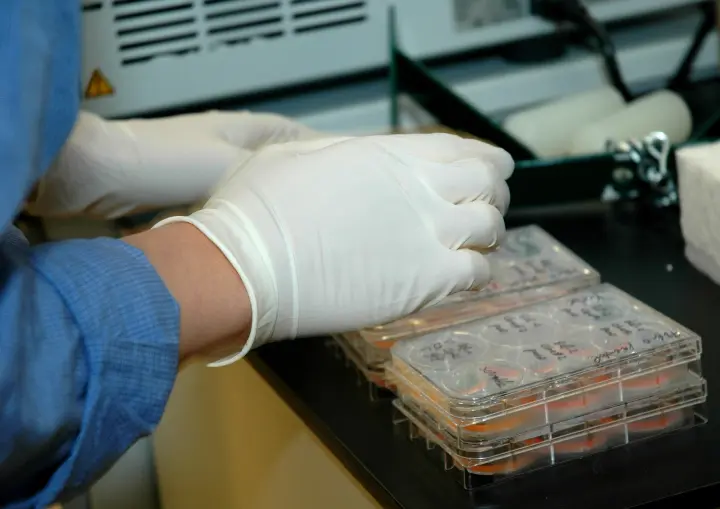
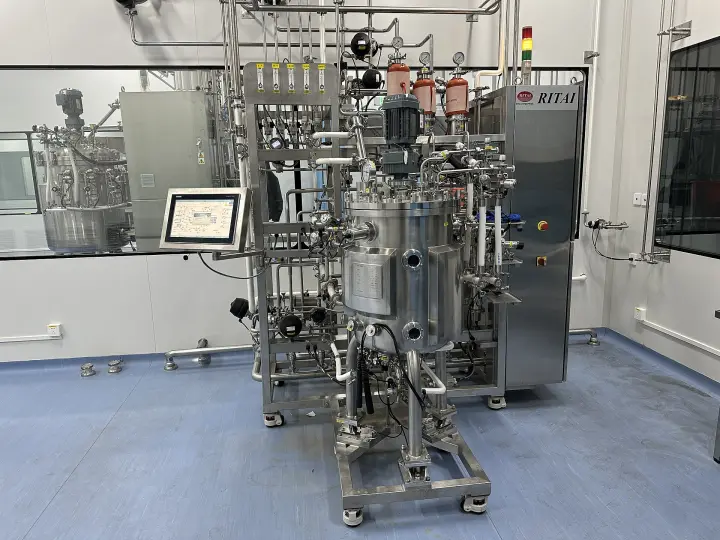
The modified yeast multiplies in a bioreactor and produces the protein (Source: NZ EPA via Scoop). The Spinoff describes microbes fed sugars and oxygen in stainless-steel vats, with the liquid drawn off, purified and dried (Source: The Spinoff).
After fermentation, the EPA says, the proteins are harvested and purified so that the genetically modified organisms are removed (Source: NZ EPA via Scoop). Daisy Lab says this downstream stage can run on existing dairy equipment such as decanters, microfiltration and ultrafiltration membranes, and spray dryers (Source: Daisy Lab via Scoop).

What can be made: whey, casein, lactoferrin
Milk protein falls into two broad families, whey and casein. Daisy Lab's first protein to scale was beta-lactoglobulin, the most common protein in cow's whey (Source: Daisy Lab via Scoop). It has also taken on lactoferrin, a protein present in milk only in small amounts.
In the United States, Perfect Day filed a GRAS (generally recognised as safe) notice for beta-lactoglobulin made by the fungus Trichoderma reesei. The FDA closed the notice with "no questions" on 25 March 2020 (Source: FDA GRAS Notice Inventory). Unilever's Breyers Lactose-Free Chocolate ice cream was reported to use Perfect Day's whey (Source: FoodNavigator).
The scientists behind the idea
Dr Nikki Freed, Daisy Lab's chief science officer, is a University of Auckland microbiologist. When co-founder Irina Miller asked whether microbes could make dairy proteins, Freed recalled telling her it was "easily feasible", adding that she now laughs about that answer (Source: The Spinoff).
Freed stresses that only the microbes are genetically engineered and that the final product is not (Source: The Spinoff). The aim, she said, is not just to make the protein but to make a whole lot of it.
Taste and texture: the point is to taste of very little
Miller has said whey on its own "doesn't taste like much" (Source: The Spinoff). At a March 2024 tasting, Daisy Lab made ice cream from very simple ingredients so nothing would mask the protein. Miller said there was very little feedback on the taste, which was exactly the goal, because naturally occurring dairy proteins have a very mild flavour (Source: Callaghan Innovation). The target is flavour and mouthfeel that match dairy made the traditional way.
Green Queen notes that beta-lactoglobulin can gel, foam and emulsify, which helps mouthfeel and texture (Source: Green Queen). For Breyers, a Perfect Day representative described the same taste, texture and experience the brand had offered for generations (Source: FoodNavigator).
No cow, but still labelled as milk
Fermentation-made milk proteins are designed to match the proteins in cow's milk. FoodNavigator reported that the Breyers Lactose-Free Chocolate pack warned it was not suitable for people with a milk protein allergy, while claiming to be lactose-free and cholesterol-free (Source: FoodNavigator).
If you have a milk allergy, check the ingredients and allergen statement even on products labelled animal-free. Avoiding lactose and avoiding milk protein are different needs, and they lead to different choices on the shelf.
Could it reach Japan?
In Japan, foods and additives made with recombinant DNA technology must pass a safety review by the Consumer Affairs Agency before they are imported or sold. The agency consults the Food Safety Commission. Making, importing or selling unreviewed products, or foods made from them, is prohibited under the Food Sanitation Act (Source: Consumer Affairs Agency).
The agency also publishes evaluation guidelines for additives made with microorganisms (Source: Consumer Affairs Agency). A fermentation-made milk protein would need to pass this process before it could appear on Japanese shelves.
The scale-up wall
GFI says the economics hinge on titre, how concentrated the target is in the fermentation broth, and yield, how much survives purification. Feedstock is a major cost. Fermentation capacity is often scarce for companies seeking contract manufacturing, and much existing infrastructure was built for bioethanol (Source: GFI).
The gap in scale is wide. UK-based Mycofeast is reported to run a 16-million-litre fermentation plant in Europe, while Daisy Lab, which it bought in October 2026, works at a 500-litre pilot scale in-house (Source: vegconomist). Turning lab success into factory volumes is the field's next test.
Sources11
- GFI — The science of fermentation(外部サイト)gfi.org
- Daisy Lab — Precision Fermentation(外部サイト)daisylab.co.nz
- NZ EPA — EPA approves precision fermentation of milk proteins (Scoop, 16 May 2024)(外部サイト)scoop.co.nz
- Daisy Lab — Daisy Lab obtains EPA approval to scale to 5,000L (Scoop, 16 May 2024)(外部サイト)scoop.co.nz
- The Spinoff — Beyond milk: the New Zealanders at the forefront of lab-grown dairy (2022)(外部サイト)thespinoff.co.nz
- Callaghan Innovation — Daisy Lab and ice-cream icon taste test dairy-identical dessert (18 Mar 2024)(外部サイト)callaghaninnovation.govt.nz
- FDA — GRAS Notice Inventory, GRN 863(外部サイト)hfpappexternal.fda.gov
- FoodNavigator — Unilever expands into animal-free dairy with Breyers Lactose-Free Chocolate (5 Mar 2024)(外部サイト)foodnavigator.com
- Green Queen — Daisy Lab scales animal-free whey production (2024)(外部サイト)greenqueen.com.hk
- 消費者庁 — 遺伝子組換え食品の安全性審査(外部サイト)caa.go.jp
- vegconomist — Mycofeast buys Daisy Lab (15 Oct 2026)(外部サイト)vegconomist.com
Information as of November 2026.